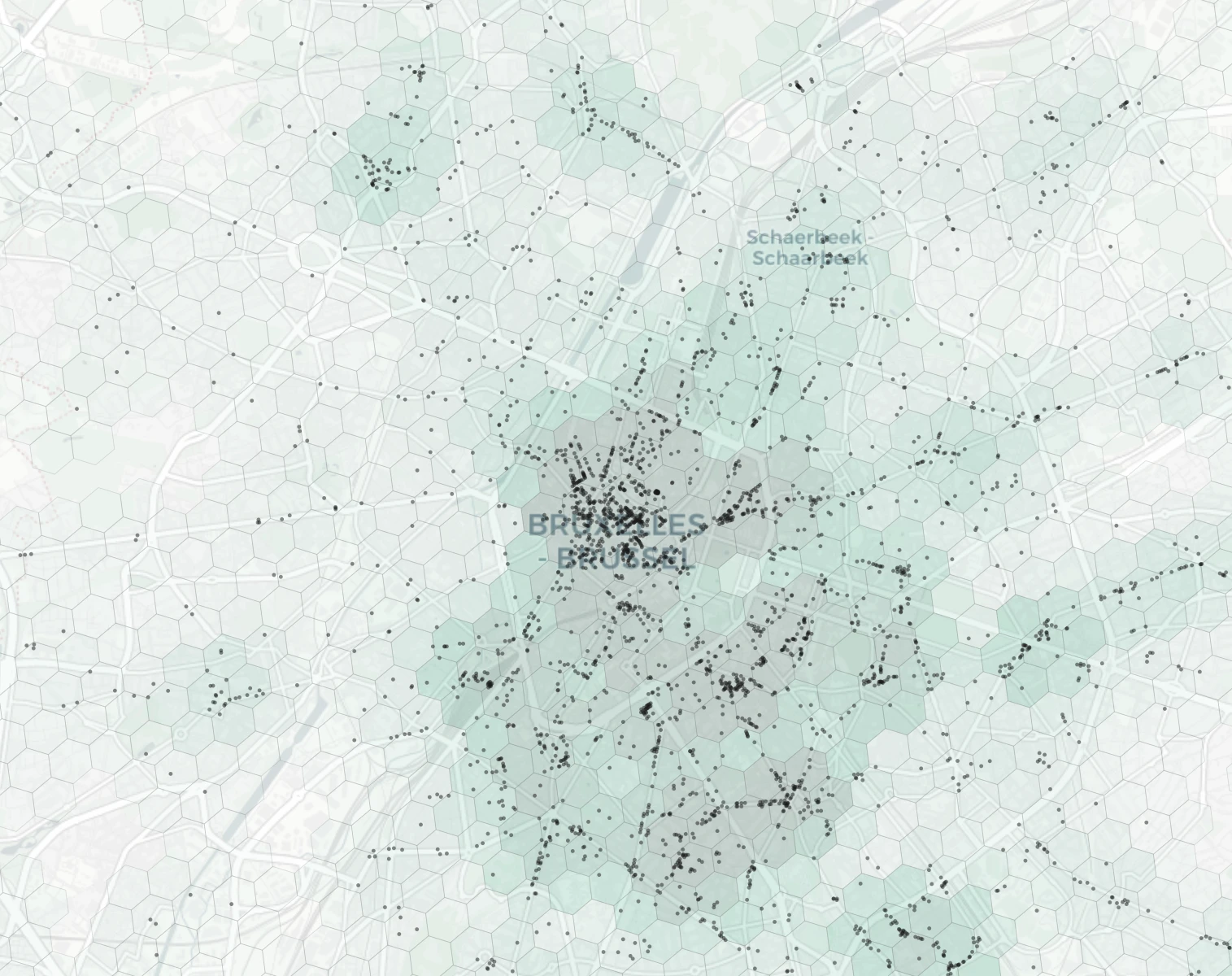
Top 5 Neighborhoods for Dining
Dining in Brussels
The Marolles district, stretching downhill from the Palais de Justice, is the most characterful food neighborhood. Rue Haute and Rue Blaes are lined with affordable bistros, North African restaurants, and Portuguese taverns. The area around the Jeu de Balle flea market has a working-class soul that translates into honest portions at fair prices. Restobières on Rue des Renards pairs Belgian beers with traditional stoofvlees (beef stew braised in dark beer).
Sainte-Catherine, once the fish market district, remains the best area for seafood. The square itself and the streets around it -- Quai aux Briques and Quai au Bois a Bruler -- have restaurants serving oysters, grey shrimp croquettes, and moules-frites. Noordzee (Mer du Nord) is a standing-only fish bar on the square where you eat from paper plates while leaning against a high table -- it is quintessential Brussels.
Ixelles, particularly the area around Flagey and the Matongé neighborhood, is the most diverse dining zone. Matongé, centered on Chaussée de Wavre, is the Congolese heart of Brussels with restaurants serving grilled fish, manioc, and pili-pili. Flagey square has brasseries and wine bars that fill up on weekends. Chatelain on Thursday evenings hosts a food market that is more neighborhood party than commercial event.
Saint-Gilles along Parvis de Saint-Gilles has become a destination for creative dining -- small plates restaurants, natural wine bars, and brunch spots that reflect the neighborhood's young, international population.
Essential seasonal note: moules (mussels) are best from September through December when they are plump and sweet. Endive gratin appears on menus in winter. Spring brings white asparagus from Mechelen, served simply with butter and egg.