Good to Know
The commune you live in matters enormously -- each of the 19 has different tax rates, services, and bureaucratic efficiency, so research this before choosing a flat.
Brussels has an astonishing density of Art Nouveau buildings, many of which are private homes you can visit during open heritage weekends in September.
The comic book culture is real and everywhere -- painted murals on buildings, dedicated museums, and shops that treat BD (bande dessinee) as the serious art form it is here.
Grocery shopping is surprisingly excellent and affordable, with Turkish, Moroccan, and Congolese markets in Matonge and around Gare du Midi offering produce at a fraction of supermarket prices.
The international school and expat infrastructure is world-class because of the EU institutions -- making it one of the easiest European cities for families relocating from abroad.
Where to Live in Brussels
Saint-Gilles has become the creative heart of Brussels. The streets around Parvis de Saint-Gilles fill up on warm evenings with a mixed crowd spilling out of bars and restaurants. The Art Nouveau architecture here is stunning -- Horta's own house is on Rue Américaine. Rents are still reasonable and the neighborhood has a creative, slightly scruffy energy that feels genuine. Best for: creatives, young couples, architecture lovers, budget-conscious professionals.
Schaerbeek is large and varied but its best parts rival anywhere in the city. The area around Place Colignon has magnificent architecture and a North African community that keeps the area lively and affordable. The Josaphat Park is a hidden gem and the Gare du Nord area is well-connected. It's less polished than Ixelles but more interesting in many ways. Best for: budget-conscious residents, families, adventurous newcomers.
Etterbeck sits between the EU quarter and the beautiful Cinquantenaire park, offering a quieter life with excellent connections. The streets around Merode have good independent shops and restaurants, and the park itself is one of the grandest in Europe. It attracts a mix of EU workers and established families. Best for: families, EU professionals, anyone wanting green space and calm.
Forest is where Brussels gets properly local. The Altitude Cent cultural venue and the Wiels contemporary art center have put it on the creative map, but the daily life is still defined by its multicultural community, affordable restaurants, and the beautiful Forest park climbing up toward Uccle. Best for: families, creatives, budget-conscious residents wanting community.
Top Neighborhoods by the Numbers
Explore Brussels by Category
Frequently Asked Questions
Do I need to speak French and Dutch?
French will cover about most of daily life in Brussels. Dutch is useful for some administrative situations and will impress people, but it's not essential for getting by. English works fine in the international bubble, but learning French opens up the real city and local friendships in a way English never will.
Is Brussels safe?
Generally very safe for a European capital. The area around Gare du Midi and parts of Molenbeek get a bad reputation that's mostly overblown but worth being aware of late at night. Petty theft happens in tourist areas like Grand Place. Most neighborhoods feel safe and walkable at all hours, especially the residential communes.
Why is Brussels so much cheaper than Paris or Amsterdam?
Partly because it's never been fashionable -- Brussels has always been the practical, unglamorous European capital, and that keeps speculative investment lower. The fragmented governance also means no single vision has ever driven up prices uniformly. Enjoy it while it lasts -- neighborhoods like Saint-Gilles are climbing fast.
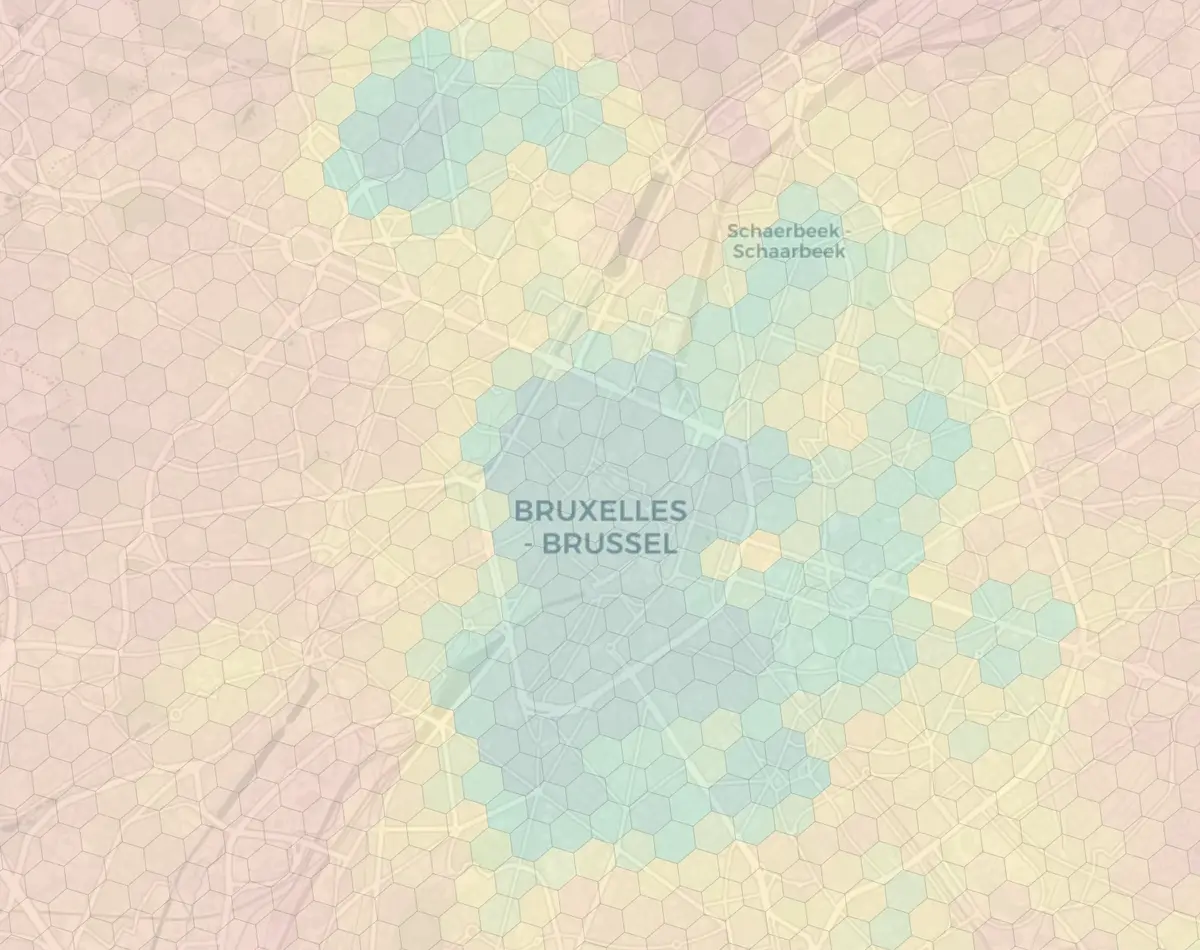
Data from OpenStreetMap contributors, licensed under ODbL. Scores computed across 22 categories using H3 hexagonal grid analysis. Last updated: 2026-04-25.